Tiangong 1
Overview
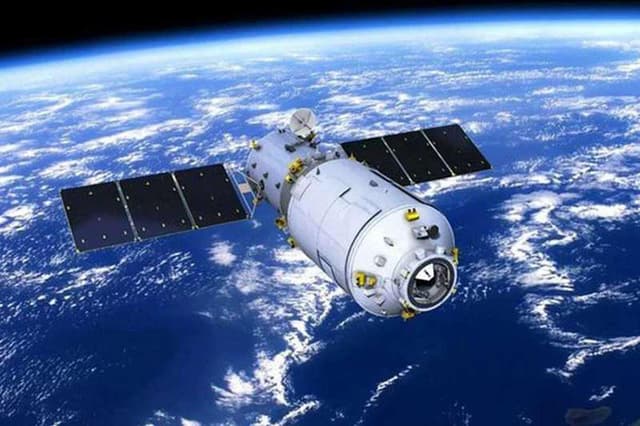
/01Tiangong-1 (Chinese: 天宫一号; pinyin: Tiāngōng yīhào; literally: "Heavenly Palace 1" or "Celestial Palace 1") was China's first prototype space station. It orbited Earth from September 2011 to April 2018, serving as both a manned laboratory and an experimental testbed to demonstrate orbital rendezvous and docking capabilities during its two years of active operational life. Tiangong-1 was visited by a series of Shenzhou spacecraft during its two-year operational lifetime. The first of these, the unmanned Shenzhou 8, successfully docked with the module in November 2011, while the manned Shenzhou 9 mission docked in June 2012. A third and final mission to Tiangong-1, the manned Shenzhou 10, docked in June 2013. The manned missions to Tiangong-1 were notable for including China's first female astronauts, Liu Yang and Wang Yaping. On 21 March 2016, after a lifespan extended by two years, the China Manned Space Engineering Office announced that Tiangong-1 had officially ended its service. They went on to state that the telemetry link with Tiangong-1 had been lost. A couple of months later, amateur satellite trackers watching Tiangong-1 found that China's space agency had lost control of the station. In September, after conceding they had lost control over the station, officials speculated that the station would re-enter and burn up in the atmosphere late in 2017. According to the China Manned Space Engineering Office, Tiangong-1 started reentry over the southern Pacific Ocean, northwest of Tahiti, on 2 April 2018 at 00:15 UTC.
Type
Orbit
Founded
Deorbited
Owners
Specifications
/02Height
Width
Mass
Volume
Onboard Crew
Docked Vehicles